
Come on girls
Do you believe in love?
‘Cause I got something to say about it
Are you with a partner who isn’t sharing their emotional needs? Or in your relationship, are you that partner?
It might be easy to assume a quiet partner doesn’t have needs, but s/he has just as many needs as the partner who vocalizes them. Sometimes a combination of self-awareness, emotional skills, and beliefs quietly stifles sharing on the part of one or both partners. It could be that
- They haven’t identified their deep emotional needs yet themselves. (Awareness)
- It is hard for them to share something like that with someone. They don’t yet have the skills for that kind of sharing. (Abilities)
- They believe they shouldn’t have to communicate them verbally. Because “if it’s love, he should know.” (Beliefs)
Why Expressing Needs Feels So Hard
The act of sharing your feelings and needs with your lover or letting your lover know how you’d like your steak cooked or whatever it is—big or small—first comes from your knowledge that you are half of the relationship, a huge percentage. A percentage that feels perfect for some, too small for some, and overwhelmingly large for others. These latter partners shy away from assuming that much space and are tempted to try to be a wallflower in their own relationship. But, Dear One, there is no one else for your partner to tango with in this dyad. They want you. The work is to show up knowing that all your preferences, wants, and needs matter to your lover and are exactly half of what will make up your great love story.
Having a hard time reckoning with emotional sharing may include trying to convince yourself that your partner’s feelings are enough to build your lives on. But without your own feelings and desires you’ve shown up to the dance without the steps. Your emotions are there—alive and driving much of what goes on in your relationship—even when you feel clueless about how to access or share them.
Some sessions with a coach, a psychotherapist, can make a huge difference in learning how to identify feelings and share them. If you did not grow up in a family well versed in identifying and sharing emotions, how would you have learned? At work? Unlikely. With friends? Dubious. Men, for example, often have received societal messages suggesting expressing emotions is not something men do . You may not have been taught that your feelings and emotional needs would be vital to the survival of your long-term love. A little bit of help in learning how to identify and express your emotions goes a long way. Give yourself a break for needing that help. You can’t know what you don’t know—and neither can your lover.
You can’t know what you don’t know—and neither can your lover.
Why Your Partner Doesn’t “Just Know”
We each have spent decades accumulating experiences and our own personal wisdom, including schemas used to operate in the world. Schemas that differ:
Some individuals grow up in a family culture in which direct confrontation is avoided at all costs and considered deeply inconsiderate. Other family cultures hold the same communication style up as the gold standard for expressing feelings and resolving differences and as a virtue of familial closeness and respect.
Some prize self-care; others, self-sacrifice.
Some take comfort in spaciousness; others, in being surrounded with collections and mementoes.
Some prioritize punctuality; others, tidiness.
These deeply engrained rules and values are often not spoken, yet they are woven into the fabric of our essence. We sometimes don’t even know they are there until we unite with someone who doesn’t have them, who doesn’t operate the same way, who doesn’t seem to see how essential certain fabrics and threads are to the tapestry of our emotional lives. It can be shocking. It can trigger anger. Until we learn about the not-knowing and until we begin to accept that gentle ignorance. He doesn’t know.
Some simple truths become profound when we unite our lives with another person.
Truths like, “We are not the same.”
It’s a fact we’ve always known and yet when we unite, we learn it again and again. Each time on a deeper level.
We are not the same.
Wow, okay. We. Are. Not. The. Same.
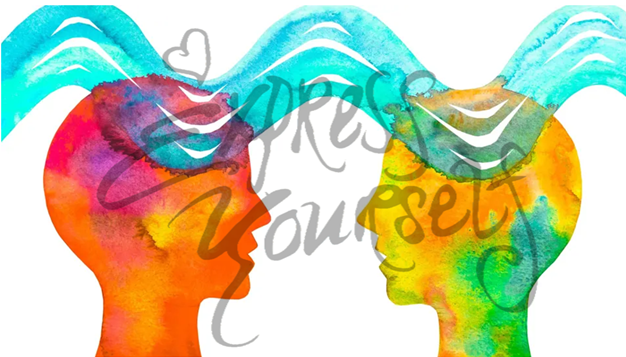
One facet of a romanticized views of eros is a lover “just knowing” the heart, mind, and soul of the other (ie, without being told). If you aren’t one of these lucky lovers, take heart. You can still love and be loved, and telling your lover exactly what you want and need can be more erotic, more vulnerable, and more intimate than those romantic notions of “just knowing.” We come from different cultures and backgrounds and families. We have different pasts and biologies. Curiosity and communication, then, are what bring us together—sharing, self-expression, learning and listening—the steps of what becomes “our” dance.
There’s Telling—and Then There’s Telling. Some partners with unmet needs are not shy about the telling. “She definitely knows what she wants and lets me know as well.” These folks sometimes, though, do need to work on the way they share. Sue Johnson begs us to learn to call to our lover in the way that he or she can hear us. She reminds us that there is an art to the telling—a way to tell—and that part of the secret of your own special love is learning the call that your lover can hear.

Call to Action
Assuming your partner automatically knows what you need risks unnecessary heartache. Should he have known if you never told him? Can you be willing to tell her? Without your emotions illuminated, you and your mate are working in the dark, fumbling and unfulfilled. Take care not to blame your lover for your unmet needs. Try this: I will not hold my spouse accountable for meeting a need I’ve never voiced. . .Sound fair? I have sat with partners who confide that “only if” they had known that *the thing* was a deal-breaker. . . But they didn’t know; their partner did not tell them. I have seen relationships end because a person found someone else after a long time of unmet needs after never having made a single ask. Give your lover a chance to be the man or woman you need them to be. Before you walk away, give them a chance. Let a therapist help you if it feels hard. Bring your feelings and needs to your lover. Your relationship is worth it, your Dear One is worth it, and so are you.

About Me
I’m Kristen Stone, a licensed clinical psychologist, behavioral sleep specialist and couple therapist with a passion to protect and grow empirically-based wellness services through training, research, and innovation. A born and bred southerner, I have found the Northeast a gracious host of my life and work for over 15 years. New England summers, falls, and—yes!—winters are magical. Then Tennessee springtime calls me home.
Subscribe to My Blog
Get new content delivered directly to your inbox.
 Kristen Stone, PhD